
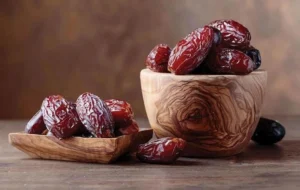
If you enjoy southern products and natural fruits, you’ve probably come across the terms “rutab” and “dates” many times. Many people assume these are two completely different fruits, but in reality, rutab and dates are simply different stages of ripeness of the same fruit—the fruit of the date palm.
In this article from Konarkadeh, we take a closer look at the subtle and interesting differences between rutab and dates, helping you make a more informed and confident choice when purchasing.
🌿 The Main Difference: The Fruit’s Ripening Stage
During its growth, the date palm fruit goes through several stages:
-
Kimri (or Khalal): At this stage, the fruit is still green and firm and is not yet edible.
-
Yellow or Red Khalal: At this stage, the fruit changes color but has not yet fully ripened.
-
Rutab: At this stage, the fruit becomes soft, sweet, and juicy—one of the most delicious phases of date development.
-
Dates: At this stage, the fruit’s moisture decreases, its texture becomes drier, and its shelf life significantly increases.
Therefore, rutab is essentially a less mature form of dates; the fruit has not yet lost all of its moisture and remains fresh, soft, and tender.
🍯 Difference in Taste and Texture
-
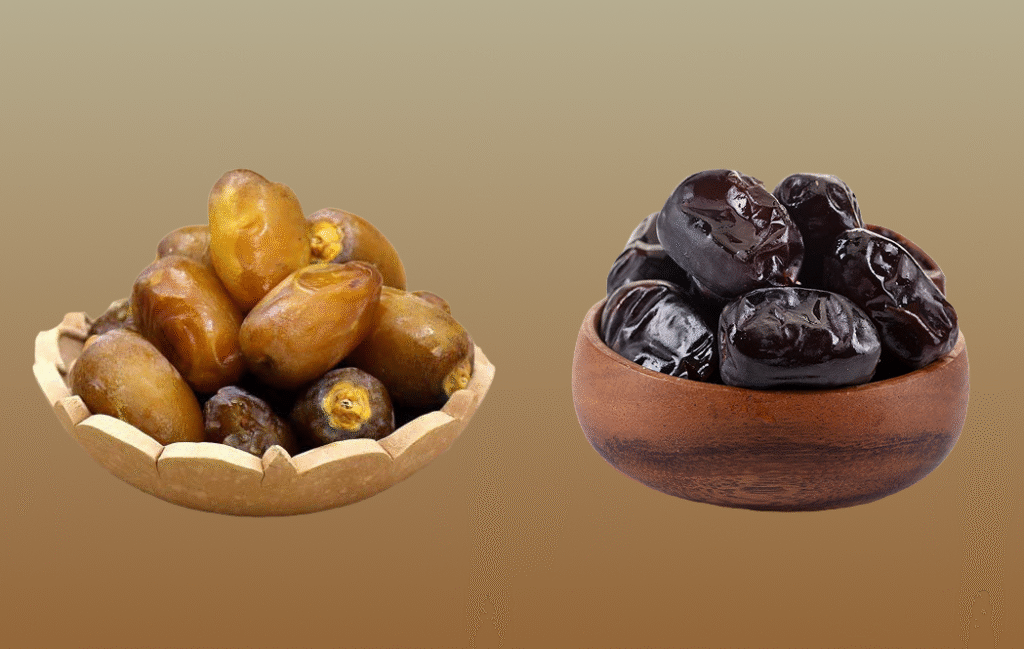
Rutab (Fresh Date): It has a sweet and mild flavor and, due to its high moisture content, is juicy and tender. Eating it gives a unique sense of freshness, like enjoying a fruit freshly picked from the palm tree.
-
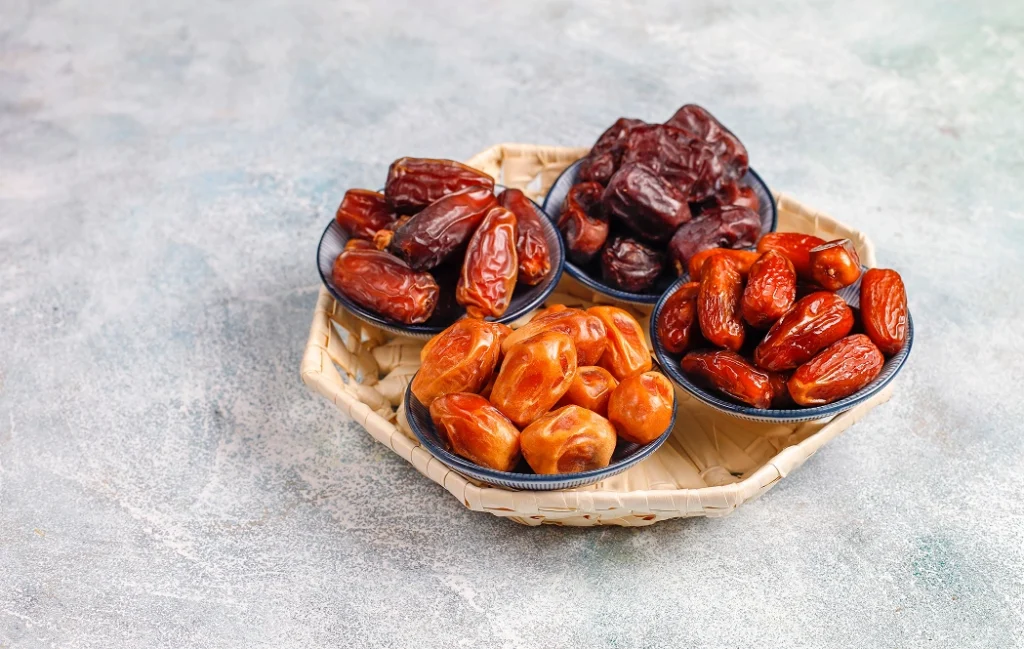
Date: It has a stronger sweet flavor and, compared to rutab, is stickier and drier. This characteristic makes it more suitable for long-term storage and export.
For example, Bam Mazafati dates at the rutab stage are among the softest and sweetest varieties, and many people prefer to consume them as rutab.
📦 Shelf Life and Storage Tips
One of the key differences between fresh dates (rutab) and dried dates is their shelf life:
-
Rutab: Due to its high water content, it has a shorter shelf life and should be stored in the refrigerator. It is usually sold in chilled or freezer-packaged forms.
-
Dates: Being drier, they have a long shelf life even at room temperature and can be stored for months without spoiling.
In fact, if you plan to consume them quickly, rutab is the more delicious option, but if you want to store them or ship them over long distances, dried dates are the better choice.
Get both rutab and dates now from Konarkade!
🌞 Nutritional Value
In terms of nutritional value, there isn’t much difference between rutab and dates, as both come from the same fruit. However, the sugar content is higher in dates due to their lower moisture.
| Feature | Rutab | Date |
|---|---|---|
| Water Content | High | Low |
| Sugar Content | Less | More |
| Energy (Calories) | Lower | Higher |
| Shelf Life | Shorter | Longer |
Both are rich in fiber, potassium, iron, and antioxidants, and they help boost energy, improve digestive health, and strengthen the body.
🍃 Various Uses in Nutrition
-
Rutab: Mostly consumed as a snack or fresh dessert. In the south of the country, it is typically served with tea.
-
Dates: Due to their drier texture, they are more commonly used in products such as date syrup, stuffed dates, date chocolates, and traditional sweets.
At Konarkadeh, we carefully source both types of dates from the palm groves of southern Iran to bring the natural and authentic taste of dates to your table.
🏝 Wrap Up
To summarize:
Rutab is the fresher form of the date, while dates are dried rutab.
Rutab is softer and sweeter but has a shorter shelf life, whereas dates are drier, longer-lasting, and better suited for long-term storage. Both are highly nutritious and offer numerous benefits, so the choice between them mainly depends on your taste and intended use.